How the packaging industry is being transformed by legislation, innovation and changing customer demands


Why this transformation matters for packaging buyers and sustainability leads
Across sectors, packaging is no longer just about protection and presentation. It’s a key component of a business’s sustainability strategy. As environmental concerns continue to climb to the top of customers’ agendas, those responsible for packaging decisions are under pressure to find solutions that meet regulatory requirements, reduce carbon footprints, and support brand reputation, all without blowing the budget. So, how are legislation, innovation, and changing public expectations reshaping the packaging industry? And more importantly, what role can sustainable packaging innovations like paper honeycomb packaging play in helping companies meet new (and exciting) challenges? Let’s explore how the tide is turning, and what it means for your packaging choices.What’s driving change in the packaging industry?
Three major forces are converging to push the packaging industry in a greener direction:1. A new wave of legislative movements
Governments around the world are tightening regulations on waste, recycling, and single-use plastics. In the UK, reforms are making it more costly – and less acceptable – to rely on plastic-heavy packaging. The biggest change came with the introduction of the Plastic Packaging Tax (PPT) in April 2022. This tax applies to plastic packaging components that contain less than 30% recycled content, and it’s charged at a rate of £210.82 per tonne (as of 2025). The goal is simple: discourage the use of virgin plastic and push companies toward recycled or alternative materials.Sustainable packaging regulations demand greater accountability
Another significant move is the Extended Producer Responsibility (EPR) initiative, which is currently being phased in. Under EPR, producers will be responsible for the full net cost of collecting and recycling their packaging waste. This includes covering the costs of disposal and managing their packaging’s end-of-life impact. Crucially, fees will be modulated – meaning sustainable, recyclable materials like paperboard and honeycomb will attract lower charges than non-recyclable plastic. Not only will businesses need to be fully accountable for the environmental impact of their packaging – they’ll pay less for investing in sustainable packaging ideas. EU directives and similar initiatives globally are only adding to the momentum. The Packaging and Packaging Waste Regulation (PPWR), for example, which formally came into force in February 2025, aims to make all packaging on the EU market reusable or recyclable by 2030. At its heart are several game-changing proposals which mandate recyclability for all packaging; place restrictions on empty space and over-packaging; encourage clear labelling to improve recycling rates; and set minimum recycled content targets for plastic packaging. For packaging buyers, all these legislative changes mean increased scrutiny and a clear push to find compliant, sustainable alternatives.
2. Innovation unlocking new possibilities
Eco-packaging is no longer a compromise. Technological advances have paved the way for high-performance materials that are both sustainable and cost-effective. For example, paper-based barrier coatings have started to replace plastic or foil linings for matched moisture and grease resistance, and mushroom packaging has become a viable and much-welcomed biodegradable alternative to Styrofoam and other rigid plastics. Paper honeycomb products, like those pioneered by Dufaylite, have also been widely adopted by the packaging industry – and for good reason. Made from eco-friendly packaging materials, they offer exceptional strength and protection while being fully recyclable and manufactured from 100% recycled paper.
3. Growing public pressure and brand expectations
Consumers are voting with their wallets. Research consistently shows that people prefer brands with strong environmental credentials, and packaging is a visible, tangible signal of those values. Data from the 2023 Buying Green Report from Trivium Packaging indicated that 82% of consumers across age demographics showed a willingness to pay more for sustainable packaging, demonstrating an obvious shift in attitudes from previous years. Other more recent studies have confirmed these results, with the 2025 Sustainable Packaging Consumer Report from Shorr highlighting that nearly 7 in 10 consumers expect the brands and retailers they support to offer sustainable packaging solutions, placing the onus on both businesses and the packaging industry as a whole to mix things up or risk missing out. These changes in preferences are fuelling different behaviour, which in turn is influencing procurement strategies across industries. Retailers, manufacturers, and logistics providers are all under increasing pressure to reduce waste, cut emissions, and switch to materials that align with their ESG (Environmental, Social and Governance) goals.How are different sectors responding to the packaging shake-up?
Every industry is facing its own unique packaging challenges, but the push for sustainability is universal. Here’s how different sectors are adapting.
Retail: From shelf appeal to sustainability seal
Retailers were among the first to feel the heat of consumer scrutiny. As a result, many are phasing out plastic void fill and switching to recyclable alternatives. But it’s not just about removing plastic – the entire packaging lifecycle is under review.
Brands are now asking:
- Can we reduce the amount of material used?
- Can our packaging be recycled kerbside?
- Does our packaging reflect our sustainability values?
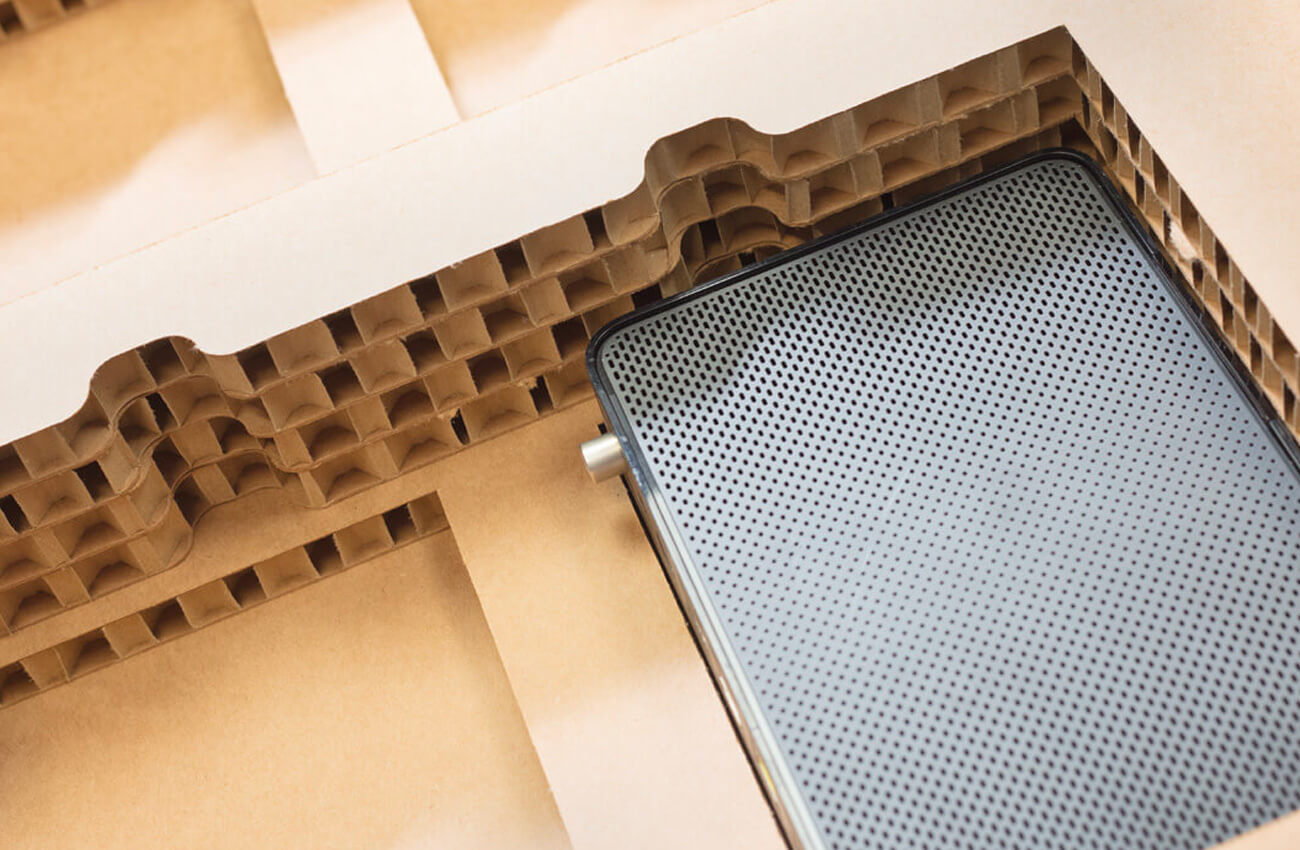
Dufaylite’s paper honeycomb is increasingly used in protective retail packaging for electronics, furniture, and homeware because it offers robust protection without plastic, supports brand positioning, and helps reduce returns due to transit damage.
Read the use case for Dufaylite products in the retail sector here.
Manufacturing & industrial: Performance still matters
In industrial and manufacturing settings, packaging often needs to do more than look good. It needs to be robust enough to protect heavy, awkward, or delicate items in demanding environments. Historically, this meant relying on rigid plastic solutions like expanded polystyrene (EPS) or foam inserts.
Now, businesses are finding that sustainable packaging alternatives can also be strong.
Our honeycomb paperboard performs on par with many plastic packaging formats, but is lighter, easier to recycle, and often cheaper to dispose of. That makes it a smart option for manufacturing companies looking to decarbonise their supply chains without compromising on performance.
Wondering how these packaging innovations work in practice? See how we’re supporting manufacturers with robust electronics packaging, and specifically fit-for-purpose white goods packaging.

Logistics & fulfilment: The last mile goes green
With the rise of e-commerce, the packaging industry needs to come up with products that can travel further and arrive in perfect condition. At the same time, logistics companies are looking for transit solutions that are lightweight, easy to handle, and don’t add complexity at scale – all things that providers need to get right.
Paper honeycomb is ideal for inserts, edge protectors, and void fill in high-volume fulfilment environments. It’s quick to assemble, cuts down on breakages, and reduces the amount of plastic leaving the warehouse.
And because it’s fully recyclable, it also helps meet internal sustainability KPIs and avoid penalties under EPR schemes.
Learn more about our transit packaging solutions.
Are paper packaging innovations going to go the distance?
A common question we hear from customers is: “Will paper really protect my product like plastic does?”
The short answer? Yes, and in many cases, it will do an even better job of looking after your goods in transit and beyond.
Leading the way in this space, our paper honeycomb board is designed to absorb impact, distribute pressure, and maintain shape under significant load. It’s used to pack everything from heavy flat-pack furniture to sensitive electronics and can be engineered to meet very specific load-bearing and cushioning requirements.
Plus, it’s customisable, lightweight, and easier to cut, shape, and recycle than many plastic equivalents. This makes it a practical upgrade for packaging teams looking to cut their carbon output and keep costs to a minimum.
What are the commercial benefits of switching to sustainable packaging solutions?
Switching to eco-friendly packaging materials isn’t just good for the planet, it’s also good for business. More companies are making the move because they’ve realised that sustainable alternatives bring with them:- Lower waste disposal costs
Plastic is more expensive to dispose of and harder to recycle. Switching to recyclable paper-based solutions reduces costs and simplifies end-of-life handling.
- Easier compliance
Using packaging made from recycled materials helps businesses avoid taxes and meet legal obligations under evolving EPR legislation.
- Improved brand perception
Customers, investors, and regulators are all watching. Packaging is one of the clearest signals of a company’s environmental priorities.
- Operational efficiencies
Materials like honeycomb board are lightweight, stackable, and easy to work with, saving time in assembly and shipping.
- Competitive advantages
Early adopters of sustainable packaging can stand out in crowded markets, win new business, and strengthen relationships with eco-conscious partners.