
Changing the way the world sees paper honeycomb

In the war against plastic waste, it’s time to embrace paper-led solutions once and for all
What is paper honeycomb, and how is it made?
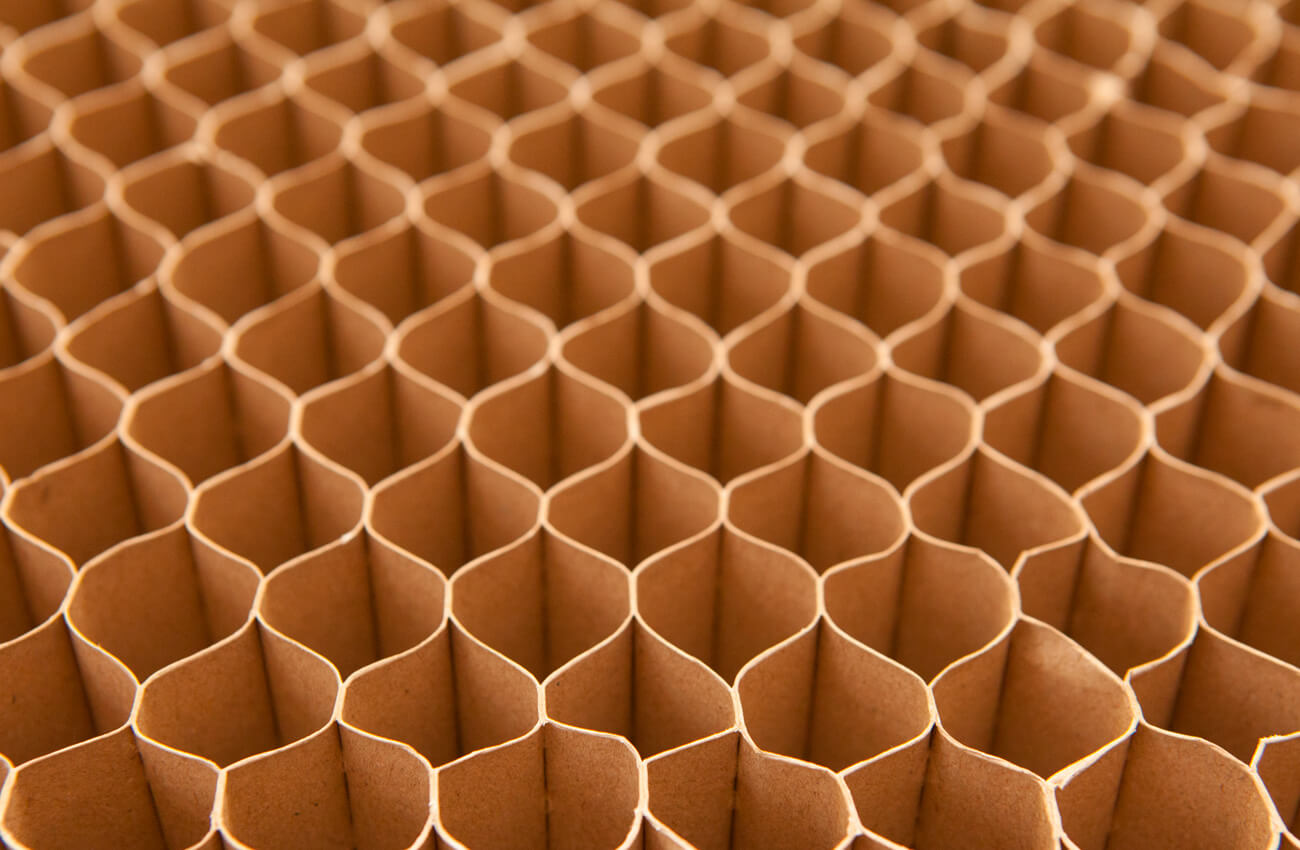
Paper honeycomb is a lightweight, eco-friendly core material that’s made by expanding layers of kraft paper into a honeycomb-like structure of hexagonal cells, similar to the arrangement you’d find in a beehive.
It’s inspired by nature but meticulously engineered for a wide range of modern-day applications.
It’s often sandwiched between two flat surfaces (like cardboard, plywood, or fibreboard) to form a board that’s strong, stable, and much lighter than solid materials. Learn more about how paper honeycomb board works here.
The evolution of paper packaging
Paper packaging has evolved far beyond being a basic necessity. It is now a statement of sustainability, creativity, and corporate responsibility. With growing environmental pressures, shifting regulations, and more conscious consumers, the packaging choices businesses make today send a powerful message. According to insights from Two Sides’ 2023 Factsheet, awareness of the environmental footprint of packaging has never been higher. Paper-based solutions are proving themselves to be among the most effective and adaptable sustainable packaging options, suitable for almost any application across industries.
What are the real-world benefits of paper honeycomb?
As paper-based materials continue to gain recognition for their sustainability and versatility, paper honeycomb stands out as one of the most innovative examples. It’s a rare material that combines impressive adaptability with a minimal environmental footprint. Here are just some of the reasons why the world is waking up to the advantages of paper honeycomb over its plastic counterparts:
- It’s lightweight yet strong:
It typically achieves high strength-to-weight ratios, meaning it’s both strong and durable, yet also easier to handle and ship.
- It’s eco-friendly:
Made from renewable kraft paper, it is both recyclable and biodegradable, ticking several sustainability boxes.
- It’s cost-effective:
It’s cheaper than solid wood, metal, or plastic alternatives, making it a viable option for budget-conscious companies and their customers.
- It boasts brilliant shock absorption:
Surprisingly, for some, paper honeycomb offers good protective qualities for packaging and transport.
- It’s refreshingly versatile:
This material can be cut, laminated, or surface-finished to mimic the look of wood, metal, or decorative finishes, expanding its usefulness even further.
- It’s stable:
Resistant to warping and provides good dimensional stability.
What is paper honeycomb traditionally used for?
Historically, paper honeycomb has been used as a lightweight filler or core material in products where strength and rigidity are needed but solid materials would be too heavy or expensive for the job.
Popular applications in packaging and displays
It has been a frontrunner for packaging and retail signage for some time now. This is because, aside from its strength, durability and flexibility, this material can be printed with any graphics you like, meaning that manufacturers and advertisers can have complete creative freedom and tie even the most mundane of packaging products into their brand image. It also possesses natural protective qualities, making it ideal for cushioning fragile goods during transit.
Use in temporary structures and interiors
Elsewhere, you’ll also see paper honeycomb used in temporary structures, such as exhibition stands and interior partitions, because it’s easy to handle, simple to assemble, and a much more cost-effective and often more sustainable option than polystyrene, PVC or fabric.
How have we incorporated this groundbreaking material into our products – and what are the benefits?
At Dufaylite, we’ve been innovating for more than 70 years. That’s seven whole decades of introducing genuinely disruptive solutions to markets that are crying out for eco-friendlier alternatives. Here’s how we have integrated paper honeycomb technology into our flagship products, and what this means for our customers.
Envirolite: Sustainable packaging reinvented to address today’s sustainability challenges
Our mission was to harness the benefits of this material to create a packaging product that could feasibly replace foam and polystyrene – and we have nailed the brief with Envirolite, one of the breakout high-performance, low-impact sustainable materials now being considered by manufacturers worldwide.
Primarily, our honeycomb liners are used to protect items like white goods, furniture, electronics, and food by absorbing shocks and vibrations. However, our materials also have secondary and tertiary uses. Honeycomb reinforcements are used in outer packaging to prevent product movement during transit, and our honeycomb pallets, layer pads, and void fills help stabilise bulk shipments.
Envirolite is:
- Environmentally friendly: Made from 100% recycled and fully recyclable paper
- Incredibly strong: Even 15mm cell honeycomb pads can support up to 25 tonnes per square metre, and even higher strengths are possible with denser configurations
- Customisable: Branding can be printed onto these products with water-based ink
- Ordered to spec: The product’s design and density can be tailored to match unique protection needs (for example, to enhance their thermal performance for use in food liners)

Clayboard: Ground heave solutions that are streamlining the construction process
Dufaylite’s Clayboard utilises a paper honeycomb core to provide smart, eco-sensitive void formers under slabs, absorbing ground movement and combating uplift.
Clayboard is:
- Slim and lightweight: Our ground heave solution is up to 30% thinner than traditional void formers, which makes for easier handling, transport and installation.
- Sustainable: Clayboard is fully recyclable and made of 100% recycled and recyclable paper, unlike bulky, non-biodegradable EPS alternatives.
- A time and resource saver: It collapses under pressure when wet to dissipate energy, avoid slab uplift, and reduce the need for steel reinforcement.
- Backed by certification: It’s BBA certified (ref. 98/3528), demonstrating its consistent quality and reliability.
- Cost-effective: Lower muck-away waste, reduced steel and excavation needs, streamlined logistics – all these benefits of Clayboard contribute to lower budgets and carbon emissions.
- Designed for control: Precise collapse performance avoids structural disruption and simplifies engineering calculations
Ultra Board: Sustainable display materials that still deliver exceptional results
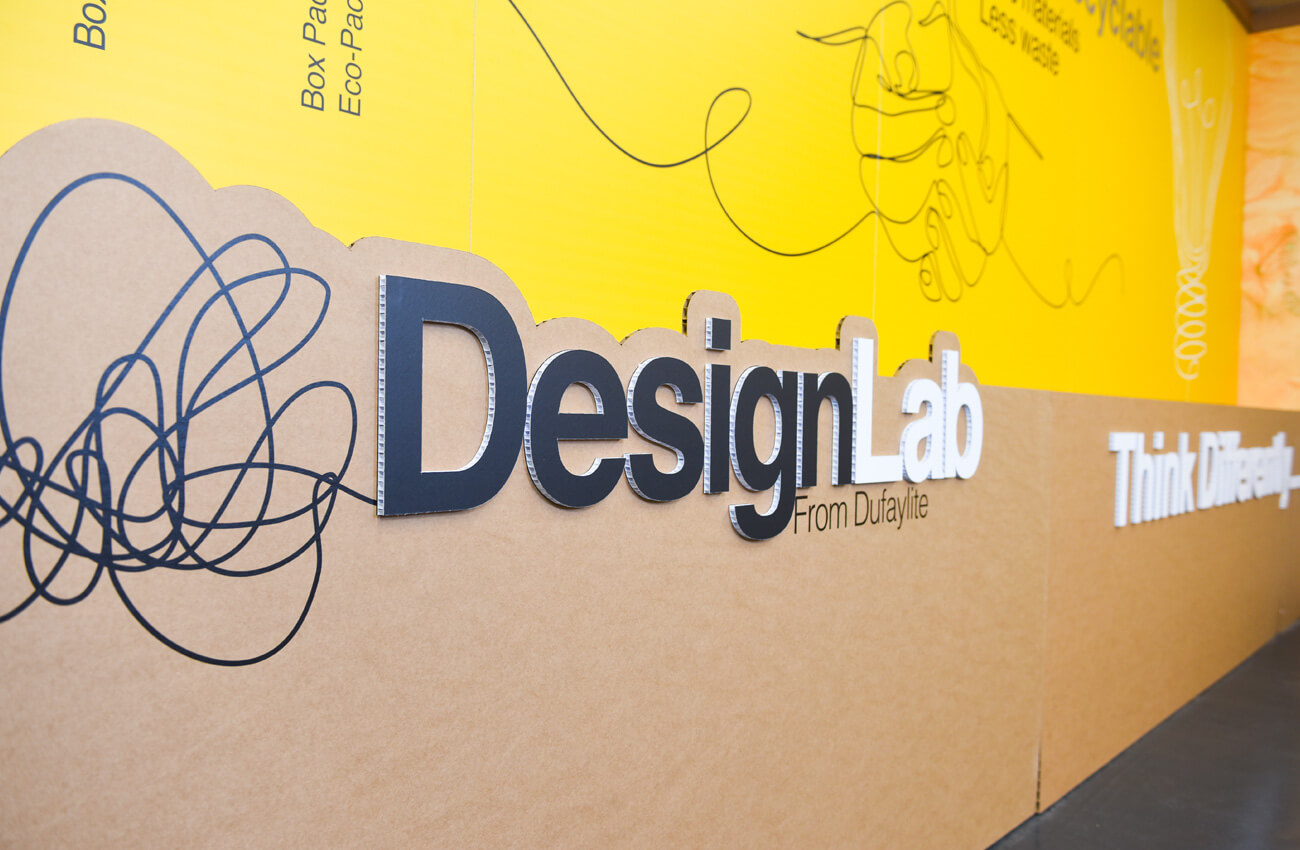
Our Ultra Board family utilises paper honeycomb board with various facings to provide creative, robust, and more environmentally friendly alternatives to plastic or MDF.
Ultra Board is:
- Adaptable: Its core is ideal for printing directly or wrapping, and it’s stronger and more sustainable than corrugated alternatives.
- Ideal for brand graphics: Our lightweight, big-cell boards are heaven-made for pop-ups, signage, and simple displays where minimal strength is acceptable.
- Dense and durable: Clayboard is suitable for weight-bearing POS units, exhibition stands, or sculptural displays.
- Available in bespoke specifications: We call upon bespoke CAD cutting and self-adhesive edging to ensure a polished finish and fast and flexible production methods.
Misconceptions: Is paper honeycomb strong enough to replace plastic and foam packaging?
Some buyers still believe it’s just “glorified cardboard” and assume it won’t stand up to plastics, foam, or wood. These misconceptions can make it seem unsuitable for wet or demanding environments. Modern engineering techniques have enabled paper honeycomb to deliver strength, durability, and resilience – all qualities that make it a genuine alternative to conventional packaging. Adopters quickly realise that switching does not mean compromising on quality. Instead, they gain a robust and eco-friendly material that can match or even outperform traditional options in demanding conditions.Why isn’t paper honeycomb the default sustainable packaging choice?
Risk aversion in construction and manufacturing
Inertia plays a significant role, as does the tendency to avoid excessive risk. Businesses often stick with materials they already know, even if better alternatives exist. Buyers worry about potential performance issues, unexpected costs, or project delays. They simply cannot afford to NOT play it safe – but this inevitably blocks innovation.
Shifting to a new packaging solution requires time, confidence, and a willingness to change established habits – and those changes don’t happen overnight.
However, for organisations that do make the switch, the benefits include a reduced environmental impact, alignment with customer demand for greener products, and the opportunity to differentiate themselves from competitors still relying on outdated materials.
Low awareness of eco-friendly alternatives
For many decision-makers, paper honeycomb is still unfamiliar. Without awareness of its strength, versatility, and proven performance, it’s easy to overlook it in favour of traditional packaging materials. This lack of knowledge means it is often dismissed as experimental or niche, rather than recognised as a reliable, scalable solution.
Plus, many organisations are tied to entrenched supply chains that prioritise plastics and other conventional materials. Changing these established systems can be complex and time-consuming, even when a better solution is available.
Once buyers learn how this paper-based material performs, they discover a material that is not only sustainable but also cost-efficient, lightweight to handle, and versatile across industries from packaging to construction.
Limited supply of paper honeycomb products for large-scale packaging needs
The global supply of paper honeycomb is still in development, which can raise concerns for buyers managing high-volume operations. Large organisations value reliability and guaranteed supply above all else, so hesitation is natural when availability appears limited. However, broader adoption will help build demand, which in turn encourages growth in the supplier network and ensures the consistency that major buyers expect. Firms that commit early not only influence supply growth but also secure stronger partnerships and priority access to innovative solutions as the market expands.Does paper honeycomb have any limitations?
As the world moves toward paper-based solutions, it’s essential for buyers to understand the boundaries of these materials. Knowing these upfront helps businesses make informed choices and avoid surprises.
Sensitivity to moisture and humidity
You may be concerned that paper honeycomb could lose strength when exposed to water or high humidity, limiting its use outdoors or in chilled goods supply chains.
The reality is that this challenge is easily addressed by adding a water-resistant coating, such as laminating with films or boards, allowing the material to perform reliably even in more demanding environments.
Strength compared to metals, plastics, and dense woods
When compared to heavy-duty materials like metals, plastics, or dense woods, paper honeycomb cannot always match their strength under extreme pressure.
However, its strength-to-weight ratio is impressive. A 15mm cell supports up to 25 tonnes per square metre. For most commercial applications, and especially when used as a core rather than a load-bearing element, it delivers outstanding performance.
Aesthetic considerations for branding
Some manufacturers may prefer not to use the natural brown look of the paper core for customer-facing applications.
This can be resolved with edging, laminated facings, or white-core honeycomb options such as Dufaylite’s Ultra Board White. These solutions provide businesses with complete control over their appearance without compromising performance.
Fire safety and compliance
Paper honeycomb in its untreated state does not meet strict fire safety requirements.
Fortunately, coatings and facings can be added to achieve fire-retardant performance, making it suitable for projects where compliance is critical.
