
Polystyrene vs Paper Honeycomb: Why it’s the smarter, circular packaging choice
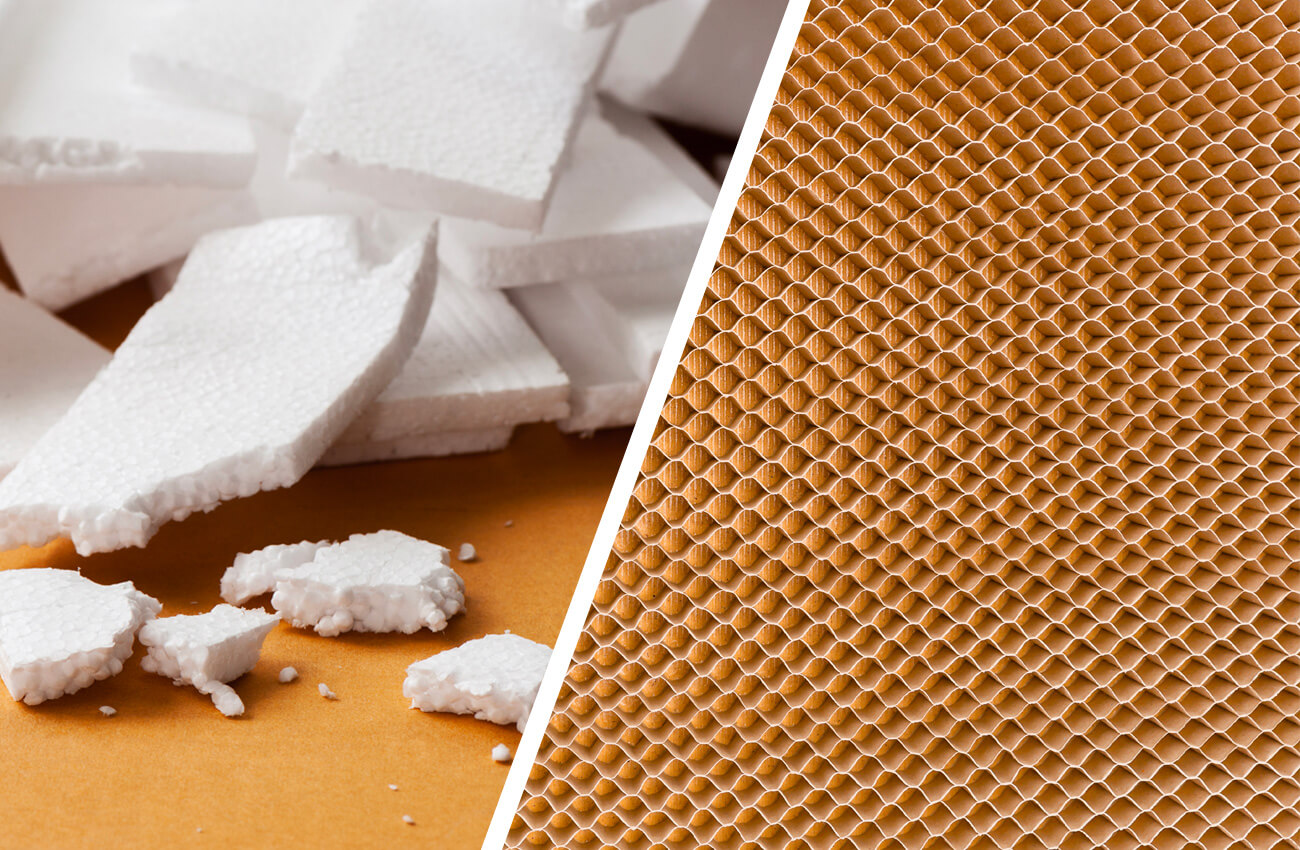
Polystyrene vs paper honeycomb packaging is now at the centre of the discussion around sustainable protective materials. Polystyrene continues to come under increasing pressure in 2025 from regulators, customers, and sustainability targets. While this comparison highlights why EPS is declining, it also shows why paper honeycomb is rapidly becoming the smarter alternative.
At Dufaylite, our vision is to free the world of polystyrene, replacing outdated, non-recyclable materials with innovative paper honeycomb solutions that protect products and the planet. This mission drives our continuous innovation in recyclable, low-carbon packaging that performs without compromise.
Over the past three years, UK and European legislation have accelerated the shift away from single-use plastics. As a result, EPS packaging for food, takeaway containers, and certain product packaging formats is now either banned or heavily restricted. The focus has shifted beyond consumer waste to include business-to-business applications, such as protective packaging for the furniture, electronics, and white goods sectors, with a current exploration of the benefits of paper honeycomb vs polystyrene.
Why polystyrene is difficult to recycle (and why paper honeycomb isn’t)
Although, in theory, both expanded and extruded polystyrene sheets can be recycled, in practice, they rarely are. Most UK councils lack the infrastructure to collect or reprocess them, and their low density, comprising up to 98% trapped air, makes transport and processing uneconomical. As a result, most polystyrene packaging ends up in landfill or incineration.
In contrast, paper honeycomb packaging is widely recyclable. It can be processed alongside standard paper and cardboard waste streams, making it a practical, circular replacement in the polystyrene vs paper honeycomb debate.
Why polystyrene has a high carbon footprint (and paper honeycomb doesn’t)
Polystyrene has a high carbon footprint because it’s made from fossil fuels. It is synthesised from styrene, a derivative of the petrochemical benzene, and both expanded (EPS) and extruded (XPS) forms require high-energy manufacturing processes. Each tonne produced generates approximately 3 tonnes of CO₂e, primarily from raw material extraction and steam expansion. These emissions are locked in for centuries because the material does not biodegrade.
In contrast, paper honeycomb has a much lower carbon footprint. Made from recycled fibres, it uses less energy in production and achieves 50-70% lower carbon footprint than expanded polystyrene, verified by Dufaylite’s CarbonQuota study.
How the UK plastic packaging tax impacts polystyrene (and why paper honeycomb is exempt)
The UK Plastic Packaging Tax applies to plastic packaging with less than 30% recycled content, currently charged at £217.85 per tonne (2024–25) (GOV.UK).
Polystyrene, including expanded polystyrene (EPS) and extruded polystyrene (XPS), cannot meet this threshold because the recycled content cannot be safely or consistently incorporated during production. As a result, all polystyrene packaging is taxed by default, adding significant annual costs for high-volume users.
Paper honeycomb packaging, by contrast, is exempt from this requirement. Made entirely from recycled paper fibres and fully recyclable again, it meets circular economy standards and avoids the Plastic Packaging Tax altogether, making the polystyrene vs paper honeycomb comparison not only environmentally friendly but also financially beneficial.
Why polystyrene poses environmental and reputational risks (and paper honeycomb doesn’t)
Polystyrene harms the environment and brand reputation because it does not break down naturally. It can persist for hundreds of years, fragmenting into microplastics that leach into soil and waterways, disrupt ecosystems, and enter the food chain.
For manufacturers and brands reporting under Extended Producer Responsibility (EPR) or ESG frameworks, the continued use of expanded polystyrene (EPS) creates both a carbon burden and reputational liability.
Paper honeycomb avoids these risks. Made from recycled paper and fully recyclable, it supports circular economy principles and offers a verified lower carbon footprint, helping businesses demonstrate credible progress toward sustainability targets and compliance standards.
Paper honeycomb: The smart, circular replacement
Paper honeycomb packaging combines strength, protection, and recyclability in a lightweight, low-carbon format. It is made entirely from recycled paper fibres, delivers equivalent or superior strength to EPS, and can be fully recycled at the end of life within standard paper recycling streams, supporting a truly circular model.
Because it is engineered rather than moulded, paper honeycomb can be cut, folded and assembled to suit complex shapes, offering design flexibility that EPS cannot match. When comparing polystyrene vs paper honeycomb performance, the latter provides greater structural integrity and better space efficiency in storage and transit.
How paper honeycomb replaces polystyrene across key packaging industries
Paper honeycomb packaging is a recyclable, high-performance alternative to polystyrene used across multiple industries. It provides the same strength, cushioning, and rigidity as expanded polystyrene (EPS) while being lighter, lower in carbon, and easier to recycle.
Here’s how paper honeycomb replaces polystyrene in real-world applications:
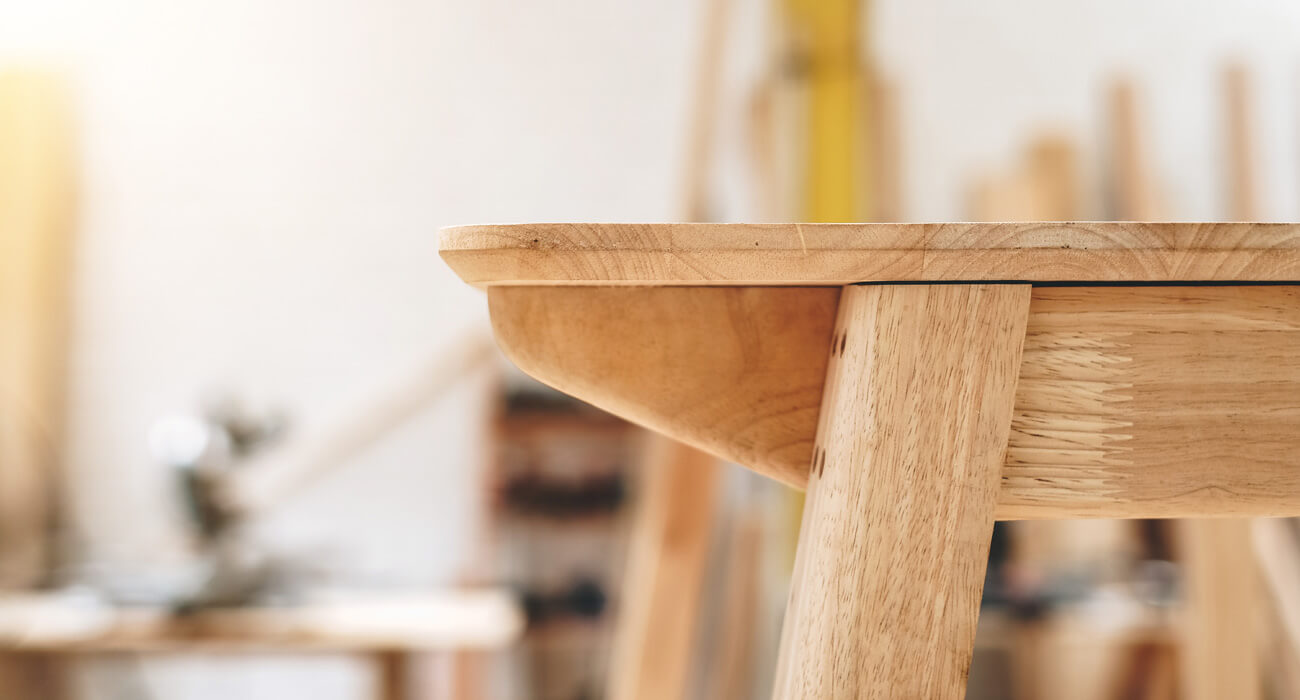
Furniture packaging
Replaces polystyrene corner blocks and void fillers with recyclable honeycomb edge protection and inserts.

White goods packaging
Provides rigid, shock-absorbent protection for appliances such as fridges, washing machines, and ovens.

Transit packaging
Ideal for pallet liners, load boards, and internal protection for goods in shipment.

Electronics packaging
Offers cushioning and structural integrity for TVs, IT equipment, and precision electronics.

In a 2025 study for food delivery boxes, Dufaylite’s paper honeycomb board liners resulted in a 50-70% lower carbon footprint across the entire lifecycle compared to expanded polystyrene insulation. The same findings would be expected to apply to other types of packaging. Discover more →
How the CarbonQuota study verified paper honeycomb’s lower carbon footprint vs polystyrene
In 2025, Dufaylite commissioned an independent cradle-to-grave carbon footprint study through CarbonQuota to compare the environmental performance of its paper honeycomb board liners with expanded polystyrene (EPS) used in food delivery and protective packaging applications.
The study confirmed that Dufaylite’s paper honeycomb consistently delivers verified lower emissions, helping packaging buyers quantify carbon savings and meet ESG and sustainability reporting obligations.
How the study was conducted
The assessment was carried out following ISO 14040/44 standards, ensuring full lifecycle accuracy and compliance with international best practice.
The cradle-to-grave lifecycle assessment included:
- Raw material extraction and sourcing
- Manufacture and conversion
- Transport to warehouses and customers
- Distribution and end-of-life disposal
Because paper honeycomb board liners do not consume energy during their use phase, that stage was excluded. This ensures a complete and transparent lifecycle view rather than a partial claim.
CarbonQuota combined primary data from Dufaylite’s UK operations with globally recognised datasets and sensitivity testing. This robust methodology provides independently verified results that can be confidently used for sustainability reporting, tenders, and carbon accounting.
What the results showed
The study found that paper honeycomb board has a 50–70% lower carbon footprint than expanded polystyrene (EPS) across its lifecycle.
Measured in CO₂e (carbon dioxide equivalent) for food delivery packaging applications:
- Paper honeycomb board: 0.16–0.26 kg CO₂e per box
- Expanded polystyrene (EPS): 0.56 kg CO₂e per box
This means emissions can be cut by more than half when switching from EPS to paper honeycomb, without compromising strength or insulation performance. Similar benefits are expected across other packaging types, including industrial, furniture, and transit applications.
Why does paper honeycomb achieve lower emissions?
Two key design features give Dufaylite’s honeycomb board a carbon advantage:
- Lightweight structure – Approximately 23,000 boxes per tonne of material, reducing raw material use and transport emissions.
- Recycled paper substrate – The use of recycled fibres significantly lowers embodied carbon and supports a circular economy model.
Together, these factors deliver high-performance protection with fewer emissions, helping brands reduce both their carbon footprint and regulatory exposure.
What this means for packaging buyers
As demand grows for verified, low-carbon packaging, Dufaylite’s CarbonQuota certification provides science-backed evidence that paper honeycomb is a credible, data-driven alternative to EPS. Packaging teams can:
- Demonstrate measurable carbon reductions in sustainability reports.
- Support compliance with the UK Plastic Packaging Tax and Green Claims Code.
- Replace difficult-to-recycle plastics with fully recyclable, UK-made materials.
What’s next for Dufaylite’s carbon footprint and sustainability assessments
The 2025 CarbonQuota study forms the foundation of Dufaylite’s ongoing environmental assessment programme. Building on verified carbon footprint data, this initiative will expand in 2026 to evaluate water usage, resource depletion, and additional lifecycle impact categories.
These continuous assessments demonstrate Dufaylite’s long-term commitment to transparency, measurable sustainability, and innovation in recyclable paper honeycomb packaging.
See the verified results and learn more about our carbon footprint assessment: CarbonQuota Study →
How paper honeycomb replaces polystyrene in furniture and white goods packaging
Following the verified CarbonQuota findings for food delivery packaging, Dufaylite’s paper honeycomb board is also replacing expanded polystyrene (EPS) in the furniture and white goods sectors, demonstrating its performance and recyclability in large-scale transit packaging.
In flat-pack furniture setups, recyclable paper honeycomb void fill securely cushions tabletops, panels, and components during transit. It is lightweight, custom-cut, and integrates easily into automated packing lines, offering the same strength and precision fit as polystyrene without the added weight, storage challenges, or end-of-life waste.
This makes it a smarter, circular alternative to polystyrene across multiple industries, reducing packaging waste, cutting emissions, and delivering the eco-friendly reassurance customers expect.
From flat-pack furniture to high-value electronics and white goods, Dufaylite’s paper honeycomb solutions combine sustainability, efficiency, and proven performance.
Why paper honeycomb outperforms polystyrene
Feature | Expanded Polystyrene (EPS) | Paper Honeycomb |
Material Source | Fossil fuel (styrene/benzene) | Recycled paper |
End of Life | Difficult to recycle | Widely recyclable |
Carbon Footprint | High | 50–70% lower for paper honeycomb liners – verified by CarbonQuota |
Weight | Low | Even lighter per volume |
Structure | Brittle | Strong and shock-absorbent |
Compliance | Liable for Plastic Packaging Tax | Exempt |
The business case for switching now
- Lower costs: Avoid the Plastic Packaging Tax while reducing transport emissions through lighter materials.
- Better performance: Comparable cushioning, rigidity, and thermal insulation to EPS.
- Simplified compliance: CarbonQuota verification supports ESG and net-zero reporting.
- Customer trust: Transparent, data-driven sustainability builds stronger brand value.
Conclusion: Time to rethink polystyrene vs paper honeycomb
Polystyrene packaging has reached the end of its practical lifespan. With tightening regulations, rising carbon costs, and an industry-wide commitment to recyclability, EPS is no longer compatible with the direction of sustainable packaging.
By directly comparing polystyrene vs paper honeycomb, the conclusion is clear: paper honeycomb offers a verified, recyclable, and lower-carbon solution that meets performance needs and compliance standards.
It’s time to replace polystyrene with packaging that’s backed by science, not slogans.
Join our vision to free the world from polystyrene
Ready to replace polystyrene?
At Dufaylite, our vision is clear — to free the world of polystyrene by offering innovative, recyclable paper honeycomb solutions that combine performance, efficiency, and verified lower carbon impact.
Contact our team today to discuss developing a certified, low-carbon packaging solution for your products and take a meaningful step toward a circular, plastic-free future.
Explore our verified results: CarbonQuota Study →
Speak to our experts: Contact Us →
