
Paper packaging: Leading the sustainable revolution


Paper packaging is no longer just a practical necessity. It’s now a powerful expression of sustainability, innovation, and brand responsibility.
In the face of rising environmental pressures, changing regulations, and shifting consumer values, the packaging you choose speaks volumes — and this one is saying all the right things.
Two Sides’ 2023 factsheet shares insights that reveal just how significant this shift has become. As awareness grows around the environmental impact of packaging, paper packaging continues to prove itself as one of the most effective sustainable packaging solutions available today – and crucially for businesses, it can lend itself to virtually any application in any industry setting.
Eco-friendly packaging that customers prefer
Consumers aren’t just noticing your packaging – they’re judging it. According to Two Sides’ Trend Tracker (2023), 70% of consumers now identify as environmentally aware. Two-thirds consider it essential to purchase products in eco friendly packaging, and 53% are actively increasing their use of paper packaging. Perhaps most tellingly, 41% of consumers say they would avoid retailers that don’t reduce their use of non-recyclable packaging. Sustainability isn’t a ‘nice to have’ anymore. It’s a brand necessity. 61% of European consumers say the environmental impact of a product’s packaging affects their purchasing decisions, and over 75% say they’d pay more for a product if it came in more sustainable packaging (Two Sides, 2023). This rising awareness has driven change at every level. Global brands are committing to eliminate single-use plastics. Retailers are investing in recyclable packaging that’s easier to process. And businesses are beginning to see that what surrounds their product is just as important as the product itself.Why more brands are switching to sustainable paper packaging
When designed well, paper packaging does far more than wrap a product. It protects, promotes, and performs without compromising the environment by using foam, plastic, or polystyrene. And it’s working at scale. In 2021, paper packaging achieved an 83% recycling rate across Europe, the highest of any material used in the packaging industry (Eurostat, 2021). Compare that with plastic packaging at just 41%, and it’s easy to see why more brands are making the switch. Take food packaging, for example. In Europe, 62% of folding cartons are used to package food (Pro Carton, 2021). These solutions don’t just protect the product, they help extend shelf life, reduce food waste, and improve overall resource efficiency.How paper honeycomb performs in transit and display packaging
There’s also a strong case for transit packaging and sustainable display materials. Paper honeycomb provides the strength and cushioning needed for shipping fragile goods, while being lightweight and fully recyclable. It can replace foam inserts or polystyrene blocks with ease, offering equivalent performance with far less environmental impact. Thanks to its natural origins and regenerative qualities, paper packaging fits perfectly into the principles of the circular economy. It’s made from a renewable resource — wood fibre — and it’s both recyclable packaging and biodegradable. That means it can be recovered through established systems, reused in future products, or returned to the earth without lasting damage. The fibre itself can be recycled an average of 3.5 times, and under lab conditions, up to 25 times (Pro Carton, 2021). Even at the end of its usable life, it can be repurposed as biofuel to generate clean energy, extending its environmental value even further.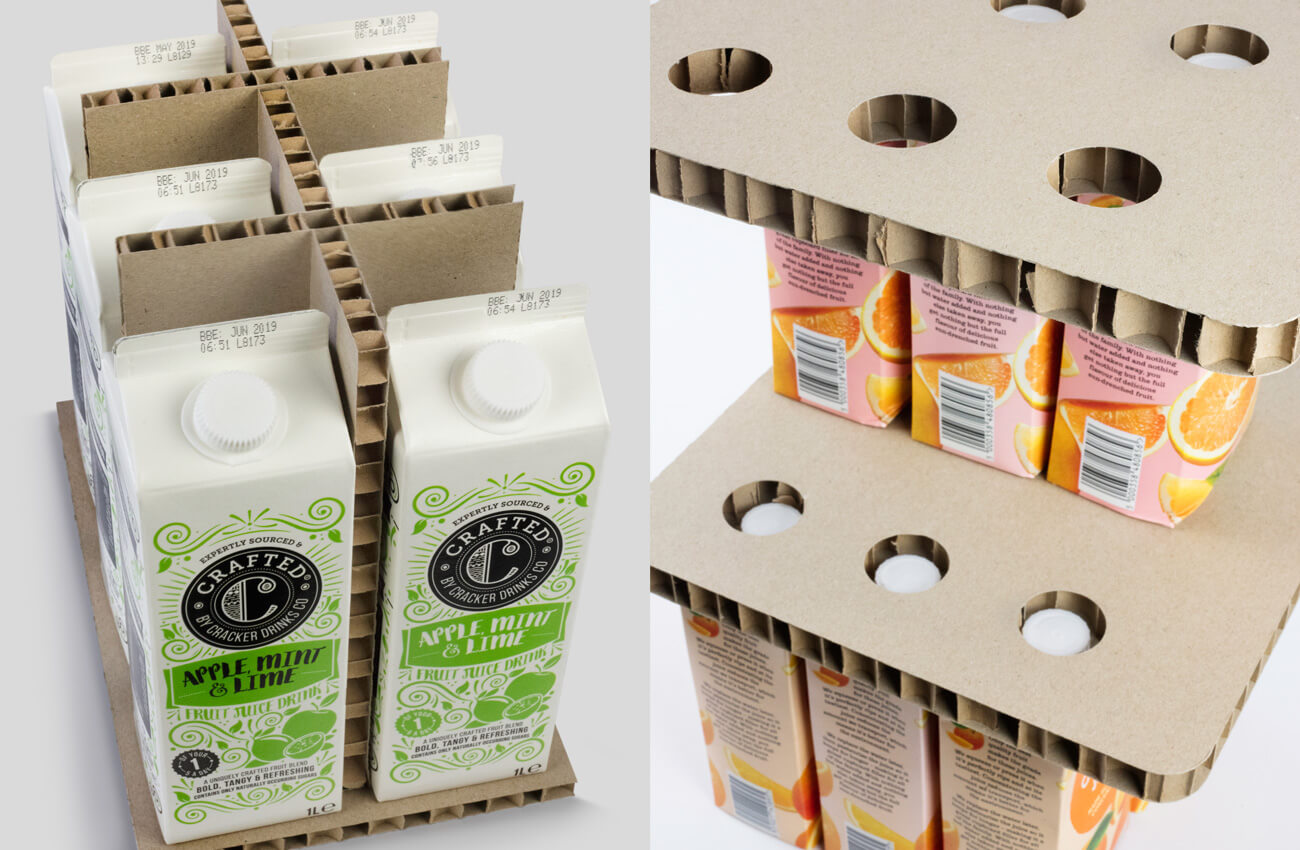
The recycling power of paper packaging
Recyclability is one of the most significant advantages of paper packaging, and it’s where this material truly leads.
In Europe, paper and cardboard are the most widely recycled packaging materials, outperforming other substrates such as metal (75%), glass (74%), and plastic (41%) (Eurostat, 2021). These figures demonstrate that paper isn’t just recyclable in theory; it’s recycled in practice, every day, through robust, established systems.
In 2022, 95% of the fibre used to produce containerboard in Europe came from recycled paper (CEPI, 2023). That’s a clear indication that the fibre-based value chain is functioning as intended, recovering material and feeding it back into production.
This concept is known as the paper cycle: collect, recycle, reuse. It underpins a model of packaging that reduces dependency on virgin resources and encourages responsible consumption.
And because paper packaging is widely accepted in kerbside recycling, it’s easy for consumers to do the right thing. Simplicity matters. A package that’s simple to dispose of responsibly is more likely to be recycled, and that keeps valuable fibre in use longer.
Why paper honeycomb is built for kerbside recycling success
Paper packaging sets a strong foundation for circularity, but not every paper-based format makes kerbside recycling effortless. The true test is whether packaging works within real-world recycling systems without requiring extra processing or sorting.
That’s where paper honeycomb packaging stands out. Made from a single recyclable material with no films, foils, or coatings to separate, it’s entirely accepted in household recycling bins across the UK. Its lightweight, durable structure means it’s easy for consumers to break down and recycle, and even easier for councils to collect and reprocess.
It’s a ready-made fit for the UK’s evolving kerbside infrastructure and it’s already proving its worth across sectors from food and furniture to white goods.
Want to see how it performs in the real world? Explore our kerbside recycling blog to learn how brands like Wild & Cultured are already making the switch to paper honeycomb packaging.
What are the best packaging alternatives to foam and plastic?
Materials like polystyrene and foam sheets might still be common in transit packaging, but they come with hidden costs and increasing scrutiny. They’re typically non-renewable, difficult to recycle, and prone to environmental damage when disposed of improperly. The World Economic Forum reports that packaging generates more plastic waste than the next four most significant industrial sectors combined. We think that the stat alone underscores the urgency to switch to paper-based alternatives. Polystyrene in particular poses a growing challenge. It’s lightweight but brittle, difficult to recycle, and often breaks into microplastics that persist in the environment for decades. Foam sheets face similar challenges, offering a consistent performance but at the cost of landfill waste and carbon emissions. A 2020 study from RISE found that paper mailing bags have a lower carbon footprint than virgin and recycled polythene (PE) mailing bags, mainly when sourced and manufactured locally. That insight makes the case for switching from plastic even stronger, particularly in the e-commerce and retail sectors. In contrast, paper packaging offers strength, structure, and sustainability in one. Take paper honeycomb, for example – an innovative material engineered for durability and impact resistance. It’s lightweight, customisable, and made entirely from recycled paper. It protects goods in transit just as effectively as foam or corrugated cardboard, but it can be disposed of through regular recycling channels; no special treatment is required.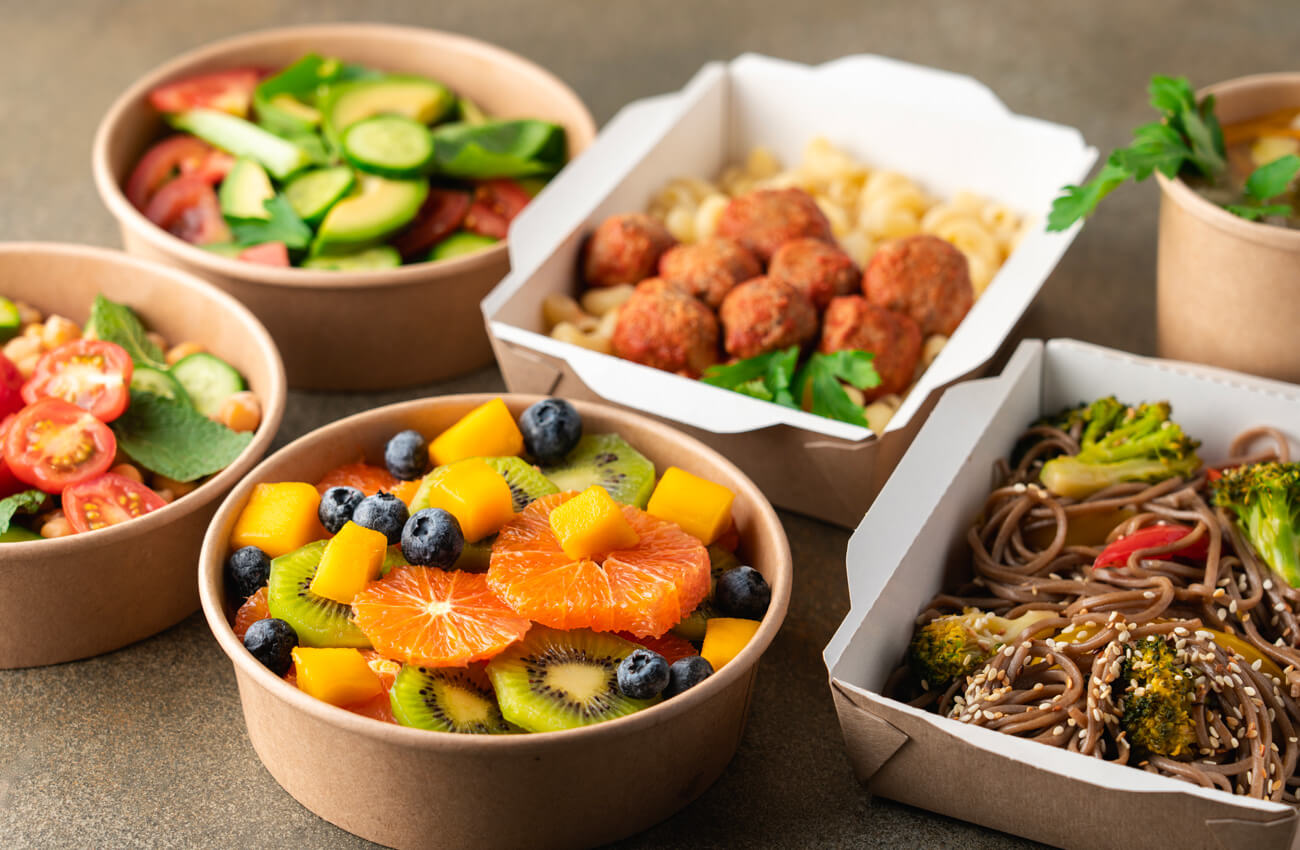
Eco-friendly food packaging materials that tell a story?
Packaging is more than protection – it’s the first impression customers are going to get of your brand and what you stand for. For food companies, that first touchpoint matters. It’s where quality, sustainability, and storytelling come together.
Customers expect packaging to do more. To feel good in the hand. To look great on the shelf. To align with the values they care about, like reducing waste and choosing materials that are kinder to the planet.
This is where paper-based solutions shine. Made from 100% recycled and recyclable materials, honeycomb packaging provides a strong, sustainable base for food boxes, including chilled items such as fresh meal kits, deli goods, and artisanal cheeses. The natural structure insulates and cushions without the need for polystyrene or plastic-heavy alternatives, keeping contents cool and protected from production to plate.
The design of this kind of paper-based packaging also plays a key role. Unbleached kraft finishes speak to transparency and simplicity, while full-colour digital print brings bold branding and product visuals to life. Add interactive elements, such as QR codes linking to farm stories or digital loyalty rewards, and the packaging becomes part of the journey, not just something to discard.
This approach sits at the heart of our eco-friendly food packaging solutions, combining sustainability, performance, and standout design in one smart, circular format.

How is paper packaging powering the circular economy?
The circular economy is about more than recycling; it’s about designing out waste from the start. And paper packaging is built for it.
It supports a regenerative material cycle that works across various industries, including food, retail, transit, and construction. Recycled fibres form the backbone of the supply chain, and when those fibres can no longer be reused, they feed into new cycles of production or renewable energy creation.
This isn’t a future-facing theory. It’s already happening.
According to Two Sides, the European paper industry is the largest industrial user of renewable energy, with 62% of its energy coming from bioenergy (CEPI, 2023). It has reduced its carbon emissions by 29% since 2010 and continues to improve material efficiency, thereby reducing environmental impact across its value chain.
Sustainable sourcing also plays a critical role. Between 2005 and 2020, forest cover in Europe grew by 58,390 km² – that’s the equivalent of 1,500 football pitches of forest growth every day (Two Sides / FAO). Today, 52% of Europe’s forests are certified under FSC or PEFC standards, ensuring a responsible, renewable fibre supply for packaging materials.
How does the plastic packaging tax affect UK businesses?
UK-based brands face increasing pressure to improve the sustainability of their packaging strategies. The introduction of the Plastic Packaging Tax creates a direct financial incentive to reduce the use of plastic that contains less than 30% recycled content. This legislation is driving greater focus on supply chain transparency, ESG reporting, and the need to choose more sustainable materials. Using recyclable, renewable and UK-made packaging such as paper honeycomb can help businesses reduce emissions, meet compliance requirements, and build trust with environmentally conscious customers. Since Dufaylite’s paper honeycomb packaging is produced in the UK, businesses also benefit from shorter lead times, lower transport emissions, and a more impactful sustainability story from production through to delivery.10 reasons why paper packaging works for modern brands
- 83% recycling rate – highest of all packaging materials in Europe (Eurostat, 2021)
- Made from renewable, responsibly sourced materials
- Fully recyclable and biodegradable
- Easy to process through kerbside recycling
- Customisable for structural or branded use
- Performs across e-commerce, transit, and display
- Alternative to foam, polystyrene, and plastic
- Reduces CO₂ emissions across the supply chain
- Aligned with circular economy principles
- Preferred by consumers for both function and value
What does the future of sustainable packaging look like?
Momentum is building around more responsible packaging, and that momentum won’t slow down. New initiatives, such as 4evergreen, a cross-value chain alliance led by CEPI, are driving further innovation and alignment within the industry. Their mission is to reach a 90% recycling rate for fibre-based packaging by 2030. More brands are rethinking not just what their packaging looks like but how it’s made, how it’s recycled, and how it impacts the planet. The push toward more closed-loop systems, smarter materials, and bio-based innovation will define the next era of the packaging industry. Paper packaging is at the heart of it, not just as a viable alternative but as a proven, scalable solution that aligns with modern values.
Is paper-based packaging the smarter choice for the future?
The facts are clear. Paper packaging leads the way in recyclability, renewability, and responsibility. It protects products. It enhances experiences. And it tells a story that resonates with conscious consumers and builds lasting trust. For any brand seeking to reduce waste, enhance its sustainability credentials, and future-proof packaging choices, this material provides a transparent, credible, and commercially savvy solution. It’s time to think differently about what packaging can do and where it goes next. Speak to Dufaylite to start your journey with sustainable paper-based packaging solutions. Contact us.Sources
- Two Sides, Paper Packaging Facts Booklet, 202
- Two Sides Trend Tracker, 2023
- CEPI Key Statistics, 2023
- Eurostat, 2021
- Pro Carton, 2021
- Forest Europe, 2021
- FAO, 2022
- UNCTAD, 2021
- World Economic Forum, 2021
- RISE, 2020
